
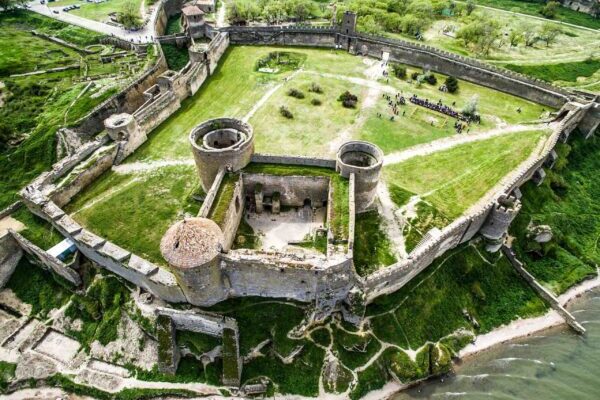
Fortress that Defended London for 500 Years – Tilbury Fort
When Henry VIII quarreled with the Pope and was looking for a place to put his artillery, he chose Tilbury. At that time, this unremarkable spot in the Essex marshes became an essential link in the kingdom’s defense system. Almost five centuries have passed since then, and the fort still stands, albeit not in combat readiness.
The Hermit Bastion
The first fortifications on the site of the future fort appeared in the 16th century by order of Henry VIII. The sovereign feared invasion from France and the Holy Roman Empire. A blockhouse with a pair of cannons was supposed to block the approaches to the Thames.
Later, the fort was hastily modernized in response to the Spanish threat of 1588. Earthen ramparts, palisades, and a moat. Everything was done according to the classics. But the real scale appeared later
After the Dutch fleet’s raid in 1667, when the defense of the Thames was on the verge of collapse, Charles II’s chief engineer, Bernard de Gomm, took up the task. He built a star-shaped fort with two moats, bastions, arsenals, and stone gun platforms. This was no longer a blockhouse, but a full-fledged fortification.
Warehouses and Barracks
From the 18th century, the fort was used not only for its intended purpose. Up to 19,000 barrels of gunpowder were stored here, garrisons were stationed, and Scottish prisoners were held after the Jacobite uprising. There were also everyday details such as internal trade, rainwater collection, and officers living across the river in Gravesend.
But 1776 was remembered for a particularly adverse event. One of the cricket matches in 1776 ended in shooting and several deaths.
In the second half of the 19th century, it became apparent that the fort was unable to meet the challenges of the time. Steam ships and long-range guns made it vulnerable. Then another reconstruction began.
Heavy artillery was added to the fort, and the defenses were deepened. However, by the beginning of the 20th century, the fort had evolved into a logistics hub. During World War I, it served as a transit point, ammunition depot, and even an air defense base. This made it a modern defense point for the British and Allied armies.
Architecture and Modernity
Today, the fort is managed by English Heritage and is open to tourists. It no longer serves any military purpose. The main elements of the 17th-century structure are well preserved: bastions, moats, the Rear and Water Gates, and powder magazines with copper doors. Inside are the former officers’ barracks, arsenals, and a chapel. Entry is via a system of bridges, moats, and ravelins. Everything is as it should be in a good fort.
Visitors will be particularly interested in:
- Original cannons from the 19th and 20th centuries;
- Wooden bridges and a system of moats;
- Unique iron-free powder magazines;
- A museum exhibition with a collection of military artifacts;
- Views of the Thames from historic platforms.
Among the attractions, visitors can find the oldest powder magazines in the country, a preserved garrison church, and a chapel for officers. A museum is located on the grounds, and guided tours are available. Suitable for both experts and tourists with children. The most convenient way to get there is by train to Tilbury Town and then on foot. Or by boat, just like in the old days.
Tilbury Fort is a rare example of a fortification that has gone through all stages of British military history, from a medieval blockhouse to a logistics hub during World War I. Today, it is simply an open-air museum and a living reminder of how London’s defense strategy has changed and what happens to fortresses that are modernized in time.